

Embodying a Brand Personality to Your Brand
Have you ever wondered how marketers come out with successful (or at times unsuccessful) mascots or advertisements?
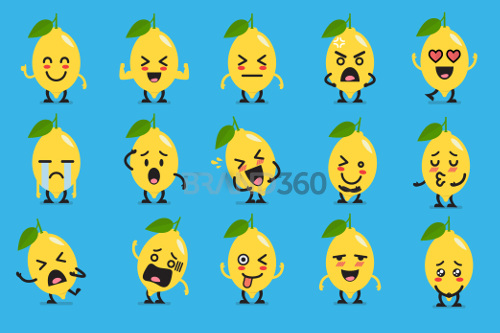
Chocolate confectionery M&M’s has anthropomorphic M&M’s chocolate candies as their mascot, complete with gloved hands and feet. They would usually appear in packaging, launches and events, and comical commercials that often poke humour and fun to the audience.
Mascots are one of the manifestations of brand personality. Brand Personality is human attributes that is given to a brand. It is broader and more applicable in many ways that you can project your brand personality into your store, flyers, websites, to endorsements and packaging.
But why should you need to have a brand personality?
Brand personality is important because humans relate easier with emotions than with facts or other stimulus. Most humans have the innate ability to emphathise and feel emotions.
Embodying a personality into your brand would therefore create an avenue where your target customers can relate and understand your brand better in terms of differentiation. In an industry where buyers are spoiled with choices, your brand personality can accentuate your uniqueness and even stand out from the rest.
There are a lot of personality theories out there. What we usually use is the 12 Brand Archetypes model. It list out 12 categories of archetypes, each with different characteristics and habits.
Come again, arche…what?
Archetypes are universal patterns and images derived from the collective unconscious. It was developed by psychologist Carl Jung in the early 1900’s with the purpose of understanding human personality through categorisation of common patterns such as fear, motivation, and core desires.
What you need to know about archetypes is that it can be embodied into your brand to give some character and depth. Let’s look at what they all are;
- The Innocent – Craves freedom and sees the world without any hidden agendas but fears being punished for doing something wrong.
- The Hero – Strives to overcome a challenge and fear weakness. Brands with this archetype wants to create winners.
- The Caregiver – Is nurturing and selfless. Offers comfort and compassion.
- The Explorer – Loves autonomy and hates feeling trapped.
- The Rebel – Defy societal norms and stands out and be different.
- The Lover – Wants your attention and loves to indulge in senses.
- The Creator – Innovative and creative, but has a fear of being mediocre and lacks vision.
- The Jester – Enjoys being humorous and brings fun to people.
- The Sage – Idealise wisdom and intelligence where people will refer to them for information.
- The Magician – Creates wonder and awe, but fear negative consequences of its action.
- The Ruler – Aims to exert control and power over the people, and is the top of the hierarchy.
- The Regular Guy – Just wants to be one of the guys and feel belonged.
It is common to have more than one archetype in a brand, to appeal to a wider audience but also to make your brand seem multi-dimensional and more human. Humans as we know, have many facets in their life.
Brands would therefore have one dominant archetype, and at most two sub-archetypes. Hotels for example, would usually have the Caregiver as the dominant archetype, as it is their business to provide comfort and shelter. That is what they are suppose to do.
But to be different than the rest of their competitors, one hotel could have the Explorer sub-archetype, and provide accommodations in the middle of a rainforest. Another hotel could have the Lover sub-archetype, and aims to pamper guests with luxury and services.
As we can see, businesses would use brand archetypes to be relatable to customers, as well as defining their brand and position themselves in the industry.
We are going to talk more about all these archetypes in depth and details in the coming articles. It is also much discussed in our guidebook The CEO’s Strategy Playbook: The Brand Building Playbook for Business Leaders, which you can download today and get your own do-it-yourself brand strategy worksheet.